FACING A LIFE CHANGING DIAGNOSIS
Support through hospitalization, treatment, recovery and a profoundly changed life
In early 2024, my life changed almost overnight. I was diagnosed with multiple myeloma and shortly afterwards suffered kidney failure. Within a very short time, I went from being physically active, independent and deeply involved in my work to spending a month in hospital, undergoing kidney treatment while traveling back and forth to another hospital for cancer treatment. At the time, I genuinely wondered whether I would come home again.
Korinne came to see me every day. This meant around three hours in the car each day, on top of the many hours she spent with me in hospital. She simply made that commitment, day after day. But what mattered was not only that she was there. It was the way she was there.
When I eventually came home, the real process of recovery began. Almost every aspect of my life had changed. My health, my work, my physical strength, my diet, my routines and my financial circumstances had all been turned upside down. There were periods of fear, frustration, anger and profound uncertainty. Korinne accompanied me through all of it with extraordinary patience and gentleness.
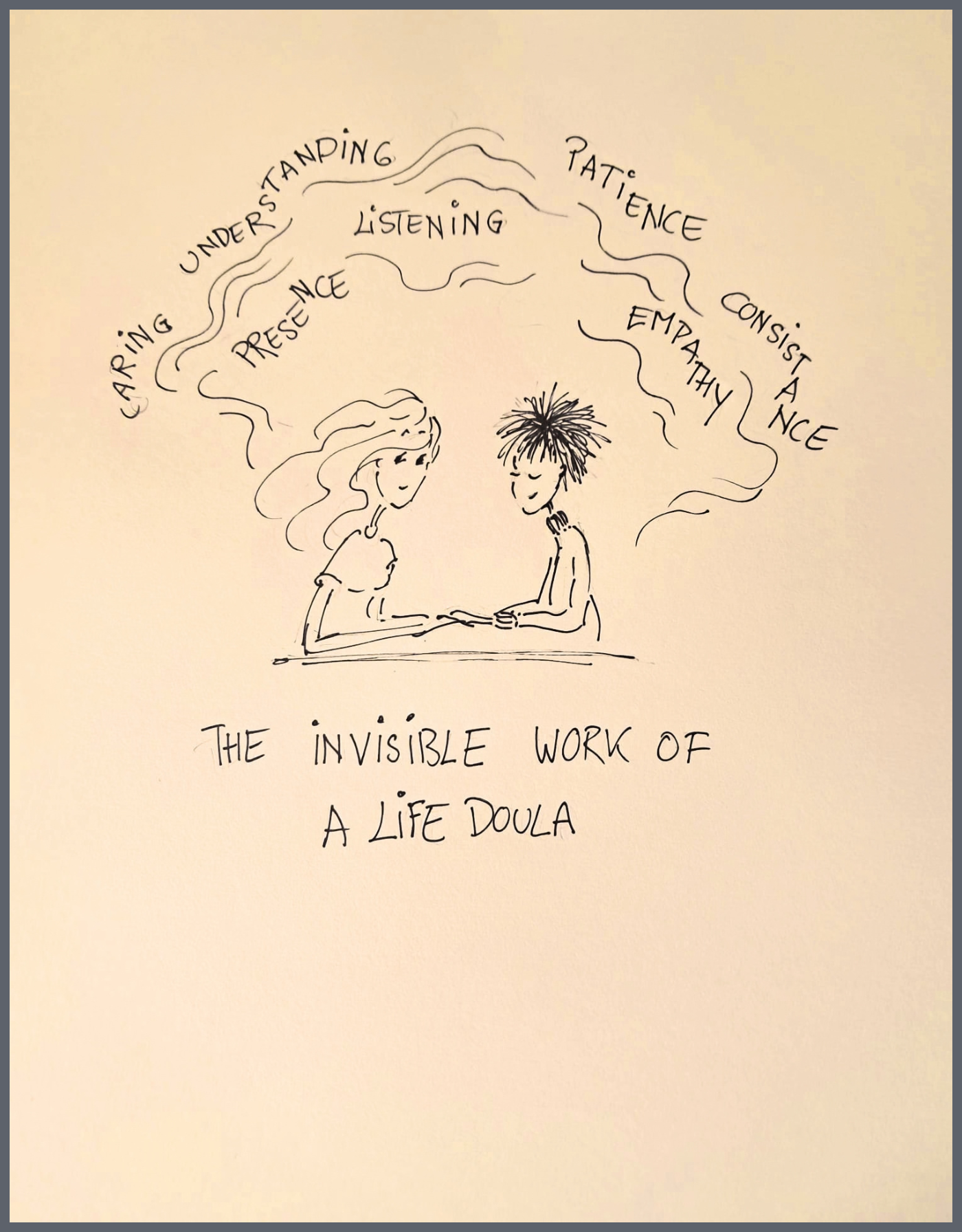
She understood something that I think is quite rare: that supporting someone in a crisis does not always mean trying to solve the crisis. I am naturally someone who, when faced with another person’s problem, immediately starts looking for solutions. Korinne is different. She knows when to help practically, but she also knows when simply to listen, when to give someone space, when to encourage and when just to remain quietly present. She never made me feel that I had to recover at a particular pace or become a particular version of myself again.
I believe this comes not only from her nature, but also from decades of experience supporting people through very different kinds of difficulty. There is a sensitivity in the way she listens and responds that does not come automatically. Over many years she has developed an understanding of how to support another person, and a set of skills that allow her to meet people where they actually are, rather than where somebody else thinks they should be.
Having witnessed the development of Korinne’s Life Support project and Academy from its beginnings to the point where it is now ready to be launched, I have come to understand something else. The instinct to help another human being is natural. Most of us want to help when someone we love is suffering. But wanting to help and knowing how to support someone well are not necessarily the same thing.
Being close to somebody going through a serious illness or another profound crisis can also be overwhelming for the person trying to help. What I experienced with Korinne showed me that the ability to support someone can be cultivated. We can learn how to listen differently, how to recognize what is needed, when to intervene and when not to, and how to remain present without taking over another person’s experience. That is why I believe what she has developed can be valuable not only to people who need support, but also to the partners, families, friends and others who genuinely want to help them and sometimes simply do not know how.
We had moved to the countryside of the Alentejo shortly before I became ill. Recovering there, surrounded by olive trees, pines, open sky and silence, turned out to be an extraordinary gift. But within that environment, Korinne was fundamental to my recovery. She helped me gradually adapt to a life that had changed completely, without ever making me feel defined by what had happened to me.
She is my wife, and of course love and partnership mean being there when the other person becomes ill. But what she gave me went beyond that. Her particular way of supporting me became an essential part of my healing. I am certain that without her presence, patience and understanding, my recovery would have been much slower and much more difficult.
Robert P.